
What are the benefits of combing hair, and why should we do it regularly?
As the morning light filters through the window screen, combing hair becomes a daily ritual for many. This seemingly mundane task of grooming actually holds timeless wisdom on health and wellness, as well as the secrets to physical and mental healing.It not only makes hair smooth and shiny, but also stimulates the meridians and acupoints on the head, linking the functions of the whole body’s organs to achieve health conditioning from the inside out. Furthermore, it can inject vitality into the body and give the mind a chance to breathe with every brushing. As the saying goes, “When you comb your hair often, you feel comfortable in body and mind.” The benefits of combing hair go far beyond simply smoothing your hair.
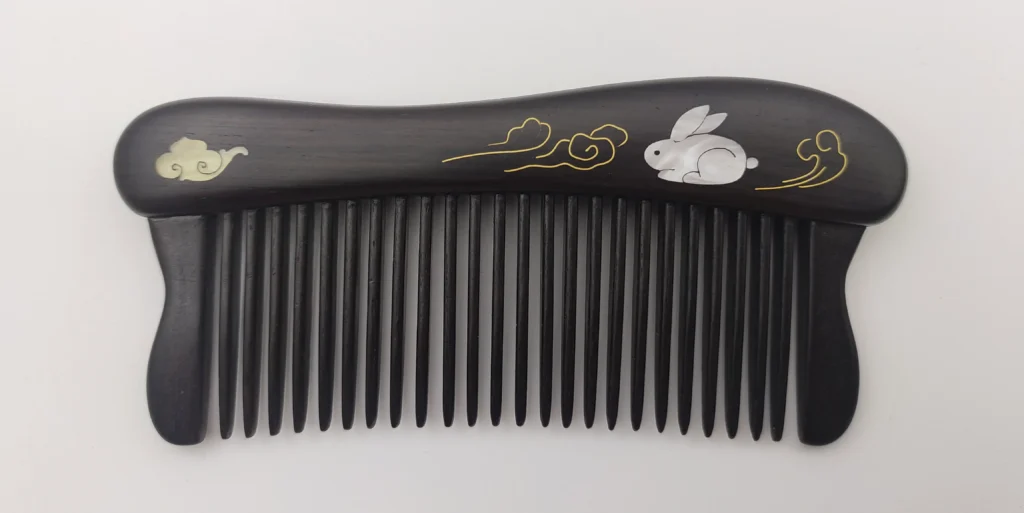
Firstly, combing hair can unblock the meridians in the head and promote the circulation of qi and blood, which is a natural "head massage".
Traditional Chinese Medicine believes that “the head is the meeting place of all yang meridians.” The head is where many important meridians, such as the Du meridian, bladder meridian, gallbladder meridian, and stomach meridian, converge. These meridians run through the whole body and connect to various internal organs.Therefore, combing our hair frequently can not only quickly relax the scalp muscles and relieve the stiffness and tension of the scalp, but also stimulate the meridians and acupoints of the head, promote the circulation of qi and blood throughout the body, and have a “ripple effect” on the whole body.
The Du Meridian is known as the “Sea of Yang Meridians,” running through the center of the head. Combing the hair stimulates the Du Meridian, which can raise the body’s Yang energy and reduce the occurrence of diseases.The bladder and gallbladder meridians are distributed on both sides of the head and connect to the liver and kidney system.
The liver stores blood and the kidneys store essence. Stimulating these meridians and acupoints can improve liver and kidney function and promote the generation of essence and blood. It can play a very good role in regulating dizziness, tinnitus, soreness of the waist and knees, and premature graying of hair caused by liver and kidney deficiency.
The Stomach Meridian runs along the hairline on the forehead. Combing our hair stimulates these areas, which can help enhance the digestive function of the spleen and stomach, and improve symptoms such as insufficient qi and blood and sallow complexion caused by spleen and stomach weakness.
The head is the part of the body with the strongest Yang energy. When it is exposed to the outside for a long time, it is most susceptible to external pathogens such as wind, cold, and dampness. When combing hair, the scalp will feel slightly warm, which can warm the meridians and dispel cold. It is especially suitable to comb hair after washing the hair or after being exposed to wind outside, so as to avoid wind and cold lingering in the head and reduce the occurrence of headaches and colds.
For office workers who spend long hours hunched over desks and staring at electronic screens, problems such as headaches, scalp numbness, and difficulty concentrating are common. Regularly combing the scalp can accelerate local blood circulation, ensuring adequate blood supply to the brain, thus alleviating headache symptoms and improving mental agility and work efficiency.
Secondly, combing hair can nourish it and improve its condition.
Qi and blood are the “nourishment source” for hair. Combing hair can promote the flow of qi and blood to the hair follicles, providing sufficient nutrition for hair growth. This can help improve gray hair in young and middle-aged people caused by insufficient qi and blood and poor meridian circulation.With long-term adherence, some people may experience the growth of new black hair or the blackening of the roots of gray hair.
For hair loss caused by insufficient blood and qi nourishment or blockage of hair follicles by oil, brushing hair can not only unblock blood and qi and nourish hair follicles, but also clean the dust and oil on the scalp surface, prevent hair follicle blockage, enhance the adhesion of hair roots, and reduce hair loss.
For dry and frizzy hair, combing promotes blood circulation and allows the natural oils secreted by the scalp to evenly cover the hair strands, forming a natural protective film. This reduces moisture loss from the hair, making it smooth and shiny, and improving problems such as dryness, frizz, and split ends.
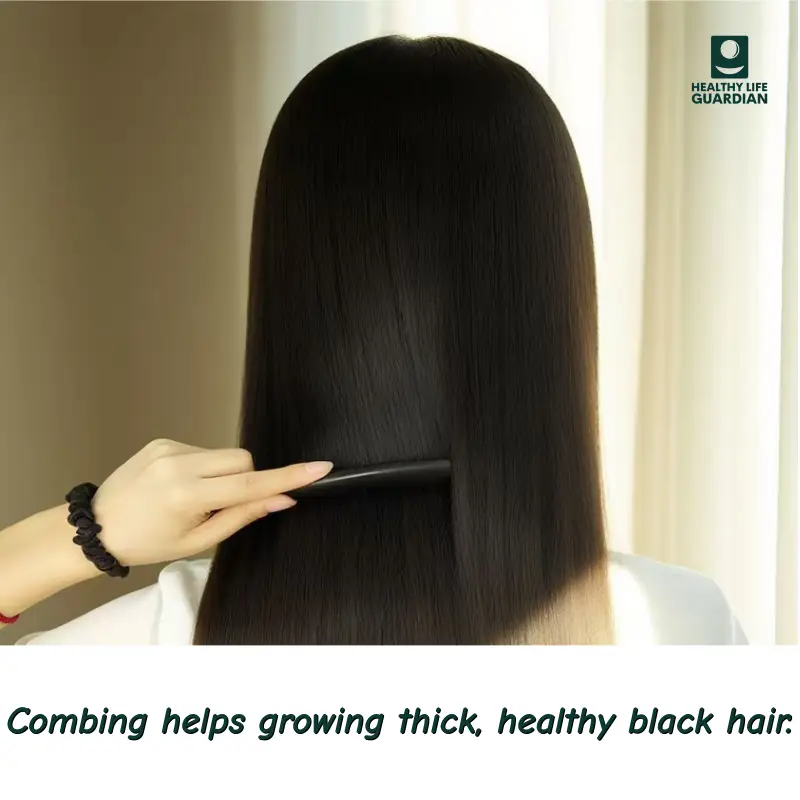
Furthermore, combing hair also has the benefit of soothing the soul.
Psychological research shows that repetitive, gentle movements can relieve anxiety, and combing hair is one such “healing movement”.When alone, combing our hair is a dialogue with ourselves. Holding the warm wooden comb and slowly combing, your eyes follow the hair strands as they glide smoothly between the comb teeth. It is as if your messy thoughts are also being combed. Those restlessness and anxiety seem to quietly fade away with each comb.Gently combing hair before bed can relax our mind and body, relieve daytime fatigue and mental tension, help us fall asleep faster, and improve problems such as insomnia, vivid dreams, and frequent awakenings.
The ancients said, “Combing your hair a hundred times will reduce illness by half,” which implies the wisdom of “harmony between body and mind”—when emotions are relaxed, the body’s resistance will naturally increase.
So how can we enjoy the perfect hair combing experience?
(1)Choose the right comb:
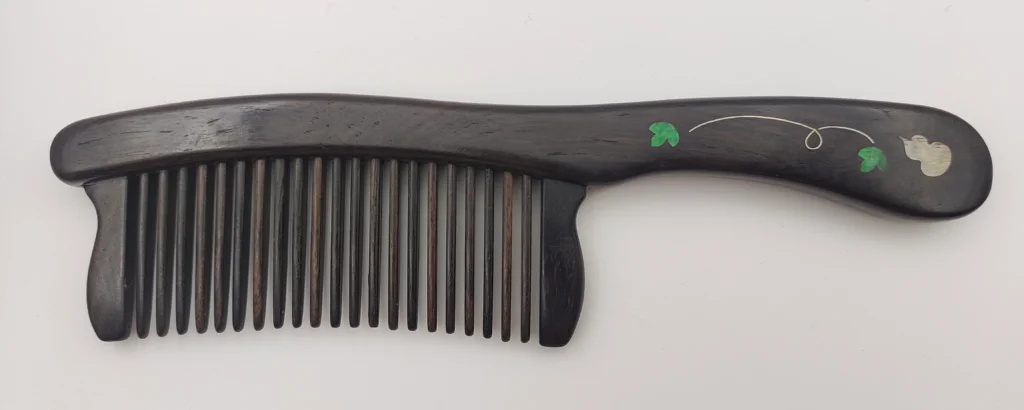
Prioritize combs made of natural materials such as wood or horn. Sandalwood combs are gentle and nourishing for hair, while horn combs have a cooling and blood-clearing effect. Avoid using plastic combs, as plastic easily generates static electricity, which can damage hair and scalp. The comb teeth should be spaced moderately and have rounded tips to prevent sharp teeth from scratching the scalp.
(2)Pressure:
When combing hair, use moderate pressure, enough to feel a slight soreness in the scalp but not pain. Avoid pulling too hard, which can damage the hair follicles. At the same time, use our fingertips to press acupoints on the head such as Baihui and Taiyang for 30 seconds each for better results.
(3)Direction:
It can be adjusted flexibly. In addition to combing with the direction of hair, occasionally combing in the opposite direction can stimulate the scalp and promote blood circulation.
(4)Duration:
Brush hair 30-50 times each morning and evening. If you persist for a week, you will feel a change in the shine of your hair and a sense of relaxation.
Hair combing taboos:
①If your scalp is broken, inflamed, or injured, stop combing your hair to avoid irritating the wound and worsening the infection.
②It is not advisable to comb your hair immediately after a meal, as the body’s energy and blood are concentrated in the spleen and stomach for digestion at this time. Brushing hair will disperse the energy and blood, affecting digestion.
③Avoid combing hair in excessively cold or hot environments to prevent your head from being affected by pathogenic factors.
A comb is simple, but the benefits of combing hair are countless!. A comb embodies our love for life and our care for our bodies. Combing hair requires no complicated skills, yet through daily practice, it can cultivate a healthy body and a calm mind. When the comb’s teeth glide across our scalp, slow down and feel the gentle healing hidden in the ordinary moments – the constant caress of our hair brings comfort to both body and mind; this is the most touching beauty of combing hair.