
How does Traditional Chinese Medicine (TCM) view the relationship between the palms and human health?
- jingjing xue
- No Comments
Located at the end of the upper limbs, the palms play a crucial role in our daily lives. In TCM theory, this small area is filled with meridians and acupuncture points connecting to the viscera and bowels. They convey the flow of qi and blood through the meridians, reflect the functioning of the viscera and bowels, and serve as a miniature map containing the secrets to health.
From the discussion of meridians in The Internal Classic of Yellow Emperor to the hand diagnosis practices of later generations of doctors, Chinese medicine’s understanding of the palm has been accumulated over thousands of years, forming a complete system covering meridians, viscera and bowels, visual diagnosis, and health preservation. It not only reveals the deep connection between the palm and the health of the whole body, but also provides a unique “window” for Chinese medicine diagnosis and conditioning.
(1) Traditional Chinese Medicine’s understanding of the palm is first based on the core theory of “meridians and acupoints”.
The Magic Pivot clearly states that six of the twelve main meridians in the human body run through the palms. The Lung meridian of hand-taiyin originates from the chest, descends along the inner side of the arm to the palm, and terminates at the Shaoshang point at the end of the thumb. This meridian forms a distinct internal organ reflex zone at the bulge of the thenar eminence (the raised area on the outer side of the palm).The Pericardium meridian of hand-jueyin starts from the chest, goes down through the middle of the inner arm to the palm, and ends at the Zhongchong point at the end of the middle finger. It runs through the middle area of the palm, and the Laogong point in the center of the palm is its important acupoint. The Heart meridian of hand-shaoyin originates from the heart, descends along the inner back edge of the arm, passes through the inner edge of the palm, and ends at Shaochong point at the end of the little finger.
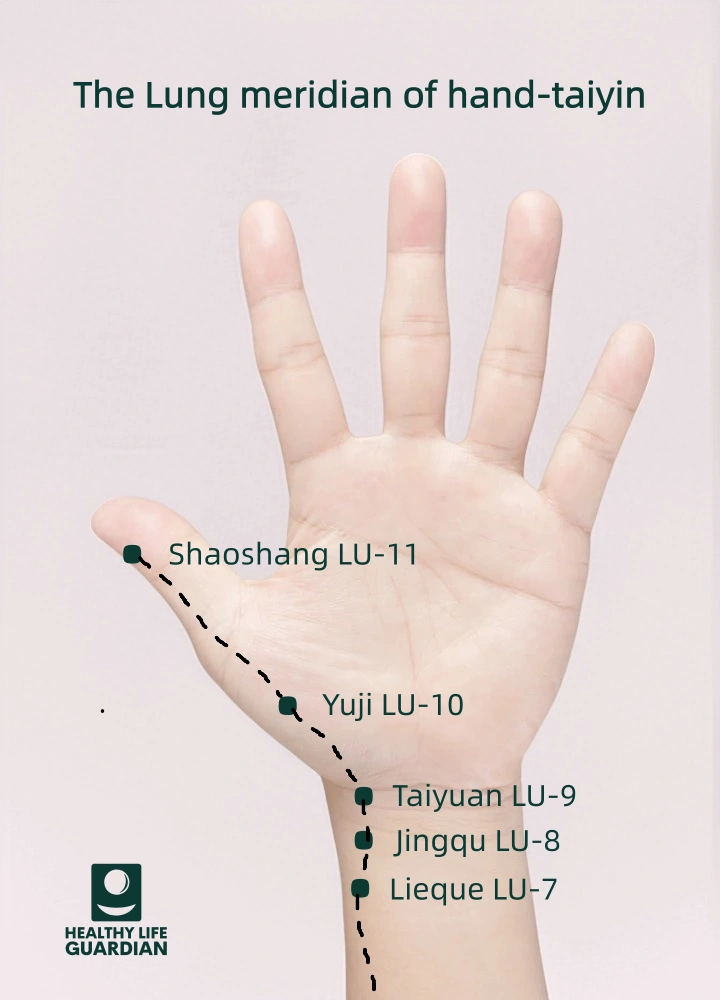
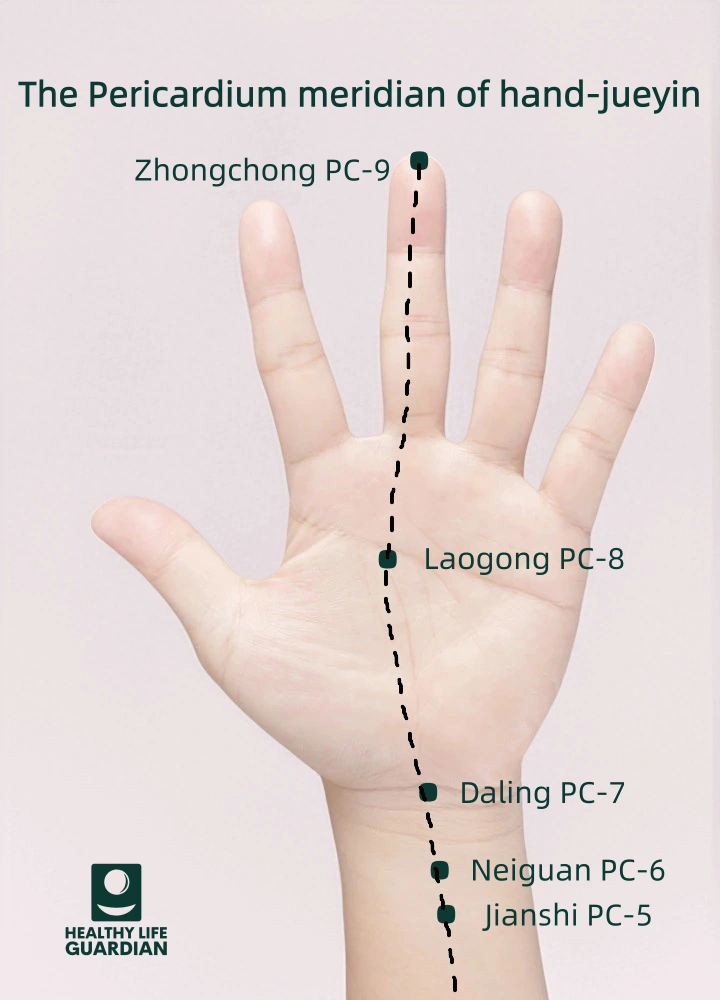
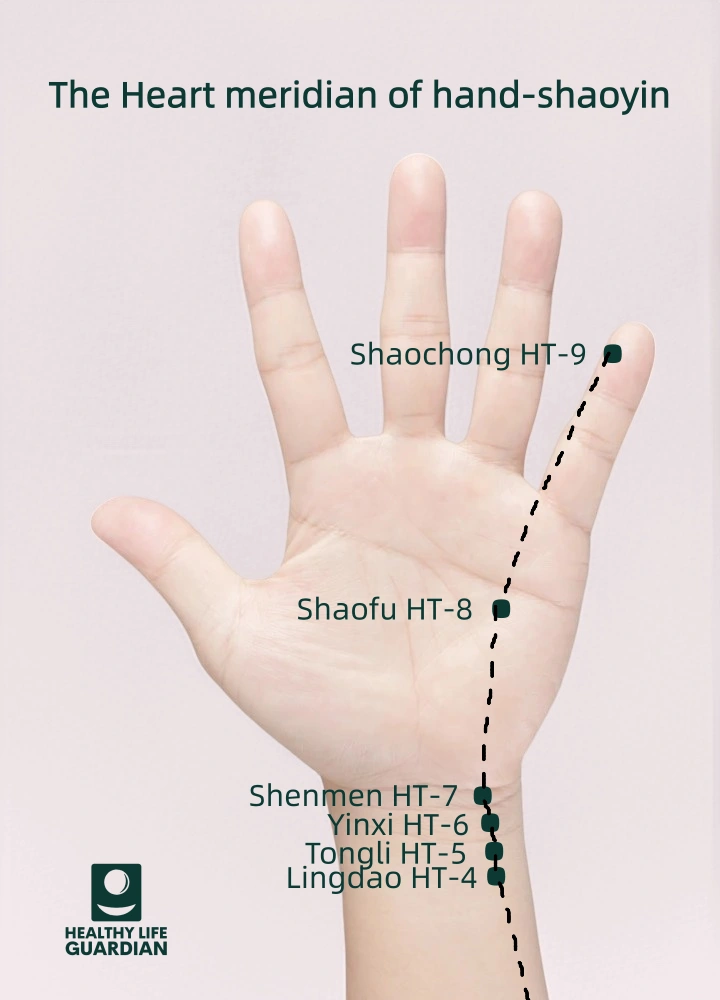
These three yin meridians connect with the Large intestine meridian of hand-yangming , Triple energizer meridian of hand-shaoyang , and Small intestine meridian of hand-taiyang on the back of the hand, forming a meridian network in the palm where “six meridians converge and qi and blood flow together,” making the palm a “key hub” for the circulation of qi and blood. Qi and blood are conducted through the meridians of the palms, transmitting the physiological and pathological information of the internal organs to the palms. Conversely, stimulating the meridians and acupoints on the palms can also regulate the functions of the corresponding viscera and bowels.
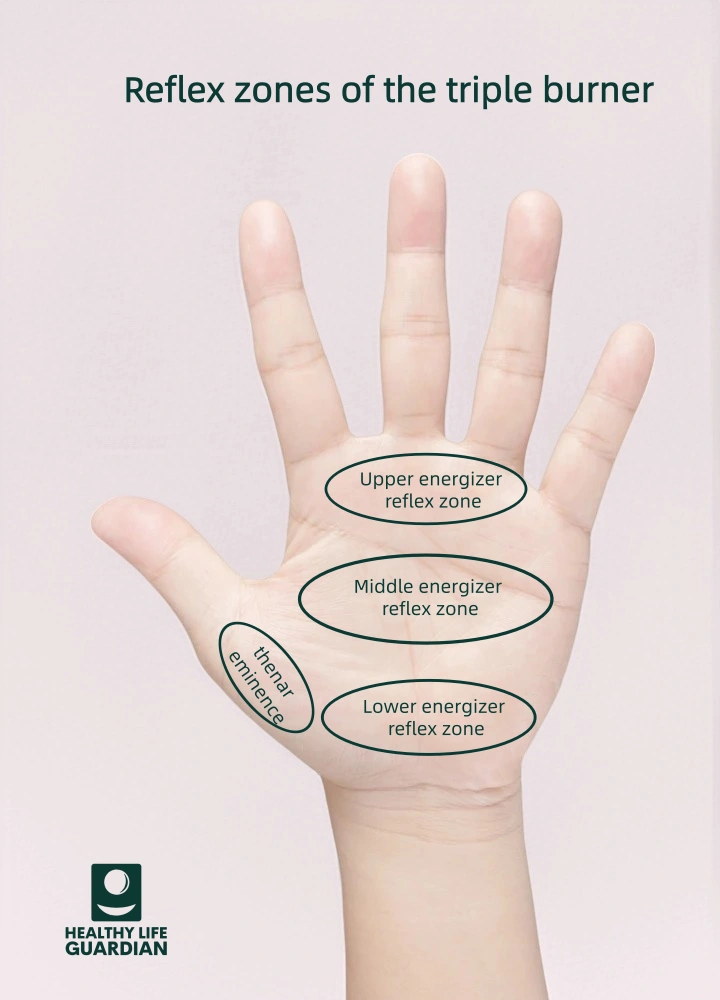
(2) Traditional Chinese Medicine believes that the palm is an "external miniature" of the functions of the internal organs. Different areas of the palm and specific internal organs form a precise correspondence based on the interconnection of Qi and blood in the "meridians-viscera and bowels" system, which we call "viscera and bowels mapping."
For example, the upper part of the palm (near the base of the fingers) corresponds to the upper energizer of the human body, covering the heart and lungs. If the upper part of the palm becomes red or hot, it often indicates excessive heart fire or lung heat, which may be accompanied by symptoms such as irritability, insomnia, and cough;
The middle area of the palm corresponds to the middle energizer, which covers the spleen and stomach. If yellow patches appear in this area and it is painful when pressed, it may be a sign of spleen and stomach weakness and dysfunctional metabolism, often accompanied by symptoms such as abdominal distension, loss of appetite, and loose stools;
The lower part of the palm (near the wrist) corresponds to the lower energizer of the human body and is related to the kidneys, bladder, and reproductive system. If the lower part of the palm is pale and cold, it often indicates kidney yang deficiency, which can easily lead to problems such as chills, weakness in the waist and knees, and frequent urination.
In addition, the Yuji point area on the palm corresponds to the lungs, the Laogong point area corresponds to the pericardium (closely related to heart function), and the Shaoshang point area corresponds to the throat and lungs. This understanding of “the local reflects the whole” makes the palm a “natural dashboard” for Chinese medicine to diagnose the health of internal organs.
(3) Traditional Chinese Medicine's emphasis on the palm is particularly evident in the clinical application of "inspection."
As a key component of TCM’s “Four Diagnosis” (inspection, auscultation, inquiry, and palpation), “inspection of the palm” assists in determining a person’s health and disease predisposition by observing characteristics such as the palm’s color, shape, texture, and temperature. Its diagnostic logic aligns with the theories of “viscera and bowels mapping” and “meridians and acupoints”.
① In terms of color, healthy palms should be light red, soft and shiny. If the palms are pale and dull, it is mostly due to qi and blood deficiency, which may be accompanied by symptoms such as dizziness, fatigue, and pale complexion; palms that are red like cinnabar may be a heat syndrome (such as excessive heart fire or liver fire); yellow palms may be related to damp heat in the spleen and stomach or abnormal liver and gallbladder function; blue or purple palms indicate qi stagnation and blood stasis, which may easily cause pain, lumps and other problems.
② From the perspective of morphology, thick and elastic palms are mostly indicative of sufficient Qi and blood, and strong organ functions; thin and shriveled palms are often indicative of Qi and blood deficiency, and a weak constitution; if a certain area of the palm is bulging or sunken, it may also correspond to abnormal functions of related organs. For example, a bulging and full thenar area indicates good lung function; if the thenar area is sunken and shriveled, it may be a sign of lung Qi deficiency.
③ From the perspective of lines, although the “life line”, “wisdom line” and “emotion line” on the palm are not strictly medical diagnostic bases, Chinese medicine can assist in judging the degree of Qi and blood fullness and the functional status of the internal organs by observing the depth, length and presence of branches of the lines. For example, a shallow or broken life line often indicates physical weakness and insufficient Qi and blood; a disordered wisdom line with branches may be related to restlessness and poor sleep quality.
(4) In terms of health care and conditioning, Chinese medicine regards the palms as a "convenient health care area". By stimulating the meridian points on the palms through massage, moxibustion, patting, etc., the health of the whole body can be regulated.
①Massaging the Laogong point on the palm of your hand can clear the heart and reduce internal heat, calm the mind and relieve irritability, insomnia, and mouth sores caused by excessive heart fire; pressing the Shaoshang point at the end of the thumb can promote lung function, clear away heat and detoxify, and relieve sore throat and cough caused by colds; rubbing the Yuji point on the palm of your hand can replenish and moisten the lung qi, and improve shortness of breath, fatigue, and susceptibility to colds caused by lung qi deficiency.
② Palm moxibustion acts on the meridian points of the palm through mild warm stimulation, warming the meridians and harmonizing qi and blood. It is especially suitable for people with weak constitution and cold hands and feet.
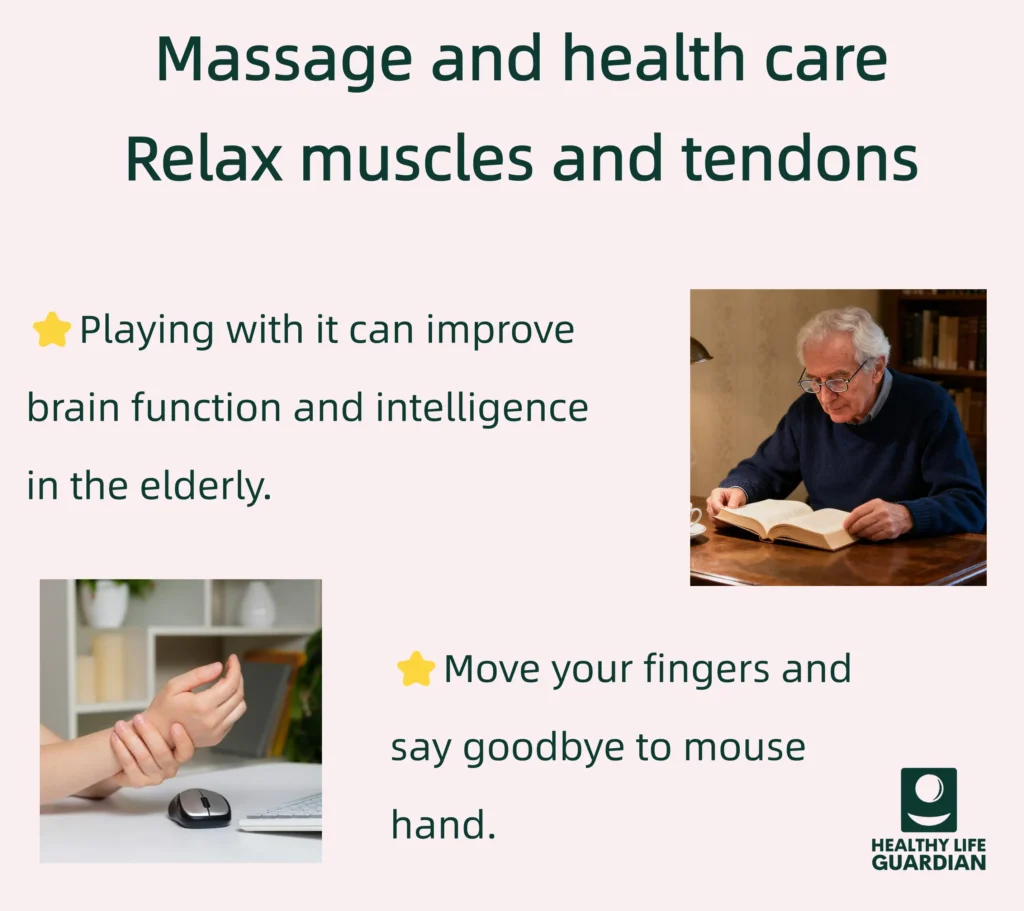
③ In addition, Traditional Chinese Medicine also advocates stimulating the meridians and acupoints in the hands by patting the palms and backs of the hands together, or by playing with hand massage balls, to promote the circulation of Qi and blood and enhance the function of viscera and bowels.
It’s important to note that while Traditional Chinese Medicine’s understanding of palmistry has a profound theoretical and practical foundation, it’s not an absolute standard.
Palm characteristics are influenced by a variety of factors, including genetics, age, and lifestyle. A comprehensive approach based on the four diagnostic methods of inspection, auscultation, inquiry, and palpation is crucial for a more accurate assessment of health. For example, red palms may indicate a heat syndrome or a normal physiological reaction after drinking alcohol or exercising. Changes in palm lines can signal illness or be a sign of natural aging. Diagnosis should not be made based solely on palmistry. Furthermore, palmistry therapy is primarily intended as a supplemental measure for daily health and minor discomfort. If significant symptoms of illness develop, seek medical attention promptly and follow the guidance of a qualified physician.
From meridian acupoints to internal organ mapping, from visual diagnosis to health regimen, Traditional Chinese Medicine’s understanding of the palm of your hand revolves around the core principles of “holistic thinking” and “differential diagnosis and treatment,” closely linking the tiny palms to overall health.
In modern life, when we frequently use our hands but neglect their health value, we can return to the wisdom of Traditional Chinese Medicine—by observing and caring for them, we can understand the health signals sent by the body, making them the “first line of defense” for health and experiencing the subtle charm of Traditional Chinese Medicine’s “preventive treatment.”